The 5-Step Recovery Routine of Elite Athletes (And How to Use It in a Normal Life)
The recovery habits the best athletes use are surprisingly simple — and free. Here's the 5-step routine you can borrow for your normal, busy life.
Gizella Nagyne Palinkas
6/1/20268 min read
Here's the thing nobody told me when I started working out seriously: the workout itself is only half the equation. For years I was grinding through five hard sessions a week, collapsing into bed exhausted, wondering why I felt worse instead of better — and why my body stubbornly refused to change the way I expected. It wasn't until I started digging into how elite athletes actually train that the missing piece became blindingly obvious. They don't just train harder. They recover smarter. And that discipline around recovery? It's the secret that separates people who plateau from people who keep progressing — no matter how busy their lives are.
Why Recovery Is Actually Training
I used to think rest days were lazy days. Wasted days. Days where other, more dedicated people were getting ahead of me. If you've ever felt that guilt — that nagging voice telling you that sitting still is falling behind — I want you to hear this clearly: rest is not the absence of training. Rest is where the training happens.
Here's the physiology: when you exercise, you create microscopic tears in your muscle fibers. You deplete glycogen stores. You spike cortisol and inflammatory markers. None of that sounds great, and honestly, in the short term, it isn't. The workout itself is a controlled act of breaking your body down. The magic — the adaptation, the strength gains, the endurance improvements — all of that happens during recovery, when your body repairs those tears and builds them back stronger, replenishes its fuel stores, and recalibrates its nervous system.
I found that once I truly internalized this, everything changed. I stopped treating recovery as something I did when I was too tired to train. I started treating it as a deliberate part of my program — because that's exactly what it is for the athletes I studied and the clients I've worked with over the years.
Elite athletes typically spend more time in structured recovery than in actual hard training. A professional marathon runner might train intensely for 2 hours a day but dedicate another 3–4 hours to sleep optimization, nutrition timing, soft tissue work, and active recovery sessions. Now, you and I are not professional athletes — we have kids to pick up, emails to answer, and dinners to make. But the principles? Those translate perfectly. You just have to know how to scale them to fit your real life.
The key insight: Your body does not get stronger during the workout. It gets stronger during the recovery that follows. Skipping recovery is like planting seeds and never watering them — you did the hard part, but you cut off the process before the results could grow. Every workout you do without proper recovery is a deposit you're making into an account you'll never be allowed to withdraw from.
The 5 Pillars of Elite Athletic Recovery
After studying sports science research and observing what high-performing athletes consistently do differently, I've distilled recovery into five core pillars. Here's what they are, how each one works in your body, and why each one matters even when you're not a professional athlete.
Sleep Quality
Sleep is the single most powerful recovery tool in existence — and it's completely free. During deep slow-wave sleep, your body releases the majority of its daily growth hormone, the primary driver of muscle repair and tissue regeneration. Elite athletes like LeBron James and Roger Federer famously prioritize 10–12 hours of sleep per night. You don't need quite that much, but 7–9 quality hours is non-negotiable if you want your workouts to actually produce the results you're working toward. Poor sleep raises cortisol (a muscle-wasting stress hormone), impairs coordination, reduces pain tolerance, tanks motivation, and increases injury risk. Protecting your sleep window is the single highest-leverage recovery habit you can build — everything else builds on top of it.
Protein Timing
Nutrition timing is one of the most underrated recovery tools for everyday exercisers. After a workout, your muscles are primed to absorb amino acids and begin the repair process — but this anabolic window doesn't stay open forever. Research consistently shows that consuming 20–40 grams of high-quality protein within 30–120 minutes post-exercise significantly enhances muscle protein synthesis compared to waiting several hours. Elite athletes treat post-workout nutrition as part of the session itself, never an afterthought. A Greek yogurt, a protein shake, eggs on toast, or chicken with rice all qualify. Pair protein with some carbohydrates to replenish glycogen stores and you've covered two major recovery pillars in a single meal that takes five minutes to prepare.
Active Recovery
Active recovery is the practice of doing low-intensity movement on rest days to promote blood flow, reduce soreness, and maintain mobility without adding to your training stress load. Think of it as wringing out a sponge — gentle movement helps flush metabolic waste products like lactic acid out of tired muscles while delivering fresh, oxygenated blood in their place. A 20-minute walk, light yoga, easy cycling, or gentle swimming are all excellent active recovery modalities. What I found works best for my clients who are chronically short on time: even a 10-minute post-dinner stroll on your off days is measurably better than complete inactivity. Active recovery speeds up DOMS resolution and keeps you feeling capable and energized rather than stiff and sluggish heading into your next training session.
Contrast Therapy
Contrast therapy — alternating between cold and heat exposure — has been used by elite athletes for decades to reduce inflammation, accelerate recovery, and activate the parasympathetic nervous system (your body's "rest and digest" mode). Cold exposure causes vasoconstriction (blood vessels narrow) while heat causes vasodilation (blood vessels widen). Alternating between the two creates a pumping effect that drives nutrient-rich blood deep into fatigued tissues. Full ice baths and hot tubs are the gold standard, but research shows that contrast showers — simply alternating between hot and cold water — produce meaningful recovery benefits. For busy moms, ending your regular shower with 60 seconds of cold water is an entirely accessible starting point that requires zero extra time or equipment.
Mobility Work
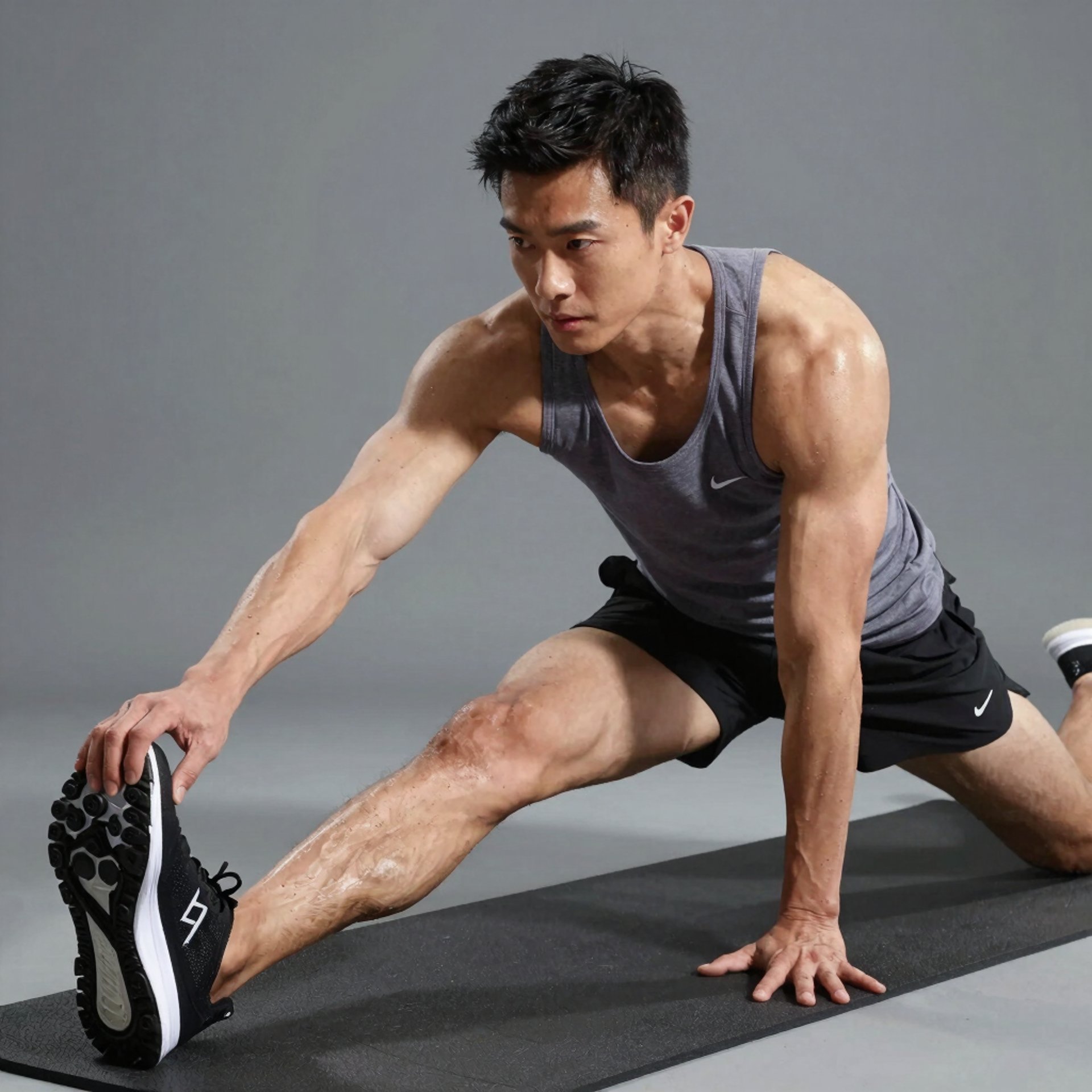
Mobility work — including stretching, foam rolling, and targeted flexibility exercises — is often treated as optional "fluff" by recreational exercisers who are short on time. Elite athletes treat it as essential daily maintenance, as non-negotiable as the workout itself. Regular mobility work maintains joint range of motion, reduces injury risk, breaks up adhesions in fascia (the connective tissue that can become tight and restrictive), and measurably reduces next-day soreness. The research on post-workout static stretching is particularly compelling: just 5–10 minutes of holding key stretches after training can reduce perceived soreness by up to 20% in the following 24–48 hours. Target the muscles you trained most heavily — for most busy moms, hip flexors, hamstrings, thoracic spine, and shoulders cover the vast majority of what they need.
Simplified Versions for Busy Moms
I hear you. You're reading this thinking, "Ella, this sounds great, but I have a 6 a.m. school run, a full-time job, and approximately zero spare hours in my day." I get it — I've been there. Here's what I tell every busy mom I work with: you don't need to implement the elite athlete version. You need to implement the real-life mom version. Small, consistent actions compound into enormous results over time, and the bar for "effective recovery" is much lower than most people assume.
😴
Sleep Smarter, Not Longer
Set a phone-down alarm 30 minutes before your bedtime target. Even small improvements in sleep consistency — same bedtime, same wake time, even on weekends — dramatically improve the quality of deep sleep. You don't need 10 hours. You need better hours. One habit, enormous payoff.
🍕
Prep Your Recovery Snack Ahead
Keep Greek yogurt pouches, hard-boiled eggs, or a pre-mixed protein shake in the fridge before training days. Make it effortless. If post-workout protein requires effort and decision-making in the moment, you won't do it when you're tired and hungry. Remove the friction in advance.
🚶♀️
Family Walks as Active Recovery
Turn rest-day active recovery into a family activity. A 20-minute evening walk with your kids or your dog checks every recovery box — light movement, fresh air, social connection, and sunshine. No babysitter required, no gym needed, and everyone benefits from the fresh air together.
🤹♀️
5-Minute Bedtime Stretch Habit
Once the kids are in bed, spend 5 minutes on the floor doing basic stretches — hip flexors, hamstrings, glutes, and a chest opener. Put on a podcast or your favorite show. This micro-routine costs zero extra time if you're already unwinding before sleep, and the soreness reduction is real and noticeable.
The key insight I want you to walk away with is this: elite athletes have support systems — coaches, nutritionists, physiotherapists, and time blocks specifically dedicated to recovery. You don't have those luxuries. But you do have the same physiological processes. Your muscles respond to protein timing exactly the way a professional athlete's muscles do. Your nervous system craves quality sleep equally. Your fascia needs mobility work just as much. The pillars are universal. The implementation just needs to fit your actual life.
Here's what worked for me and my clients: start with just one pillar. If your sleep is consistently broken or too short, focus there exclusively for two weeks before adding anything else. If your post-workout nutrition is non-existent, fix that single habit first. Stacking all five pillars at once almost always leads to overwhelm and abandonment. Build one habit until it's automatic, then layer the next one on top. Six months later, you'll barely recognize how your body feels and performs.
Why Skipping Recovery Costs Results
Let me paint a picture that I see constantly among the women I work with. She starts a new fitness routine — motivated, consistent, pushing herself in every session. She trains five times a week for six weeks, but she's not sleeping enough because life is genuinely busy. She eats quickly after workouts if she eats at all. She has no rest-day protocol — she either trains again or sits completely still. She pushes through fatigue because she's been told that's what discipline looks like.
By week eight, she's exhausted in a way that doesn't lift. Her performance has plateaued or dropped noticeably. She's developing nagging aches in her knees, her lower back, her shoulders. Her motivation — once high — has cratered. She starts skipping sessions, not from lack of willpower, but because her body is operating in a state of chronic, unresolved physiological stress. She blames herself, concludes she's not cut out for this, and either doubles down (making things considerably worse) or gives up entirely.
This isn't a mindset failure. It's a physiology failure. The body has a finite threshold for stress — all stress, not just exercise — and when that threshold is chronically exceeded without sufficient recovery, the system breaks down systematically. Cortisol remains elevated, actively suppressing muscle protein synthesis and promoting fat storage (particularly around the abdomen, which is especially frustrating). Inflammation that should be acute and temporary becomes chronic and systemic. The immune system weakens. Sleep quality deteriorates further, creating a vicious cycle that feeds itself.
I found that the athletes and everyday women who consistently make progress over months and years are not the ones who push hardest in every single session. They're the ones who have mastered the discipline of knowing when to ease off — and who treat their recovery practices with the same intentionality and respect they bring to their training sessions.
The data on this is striking. Periodized training programs that include deliberate recovery phases — both within weeks and across multi-week cycles — produce significantly greater long-term adaptations than programs that simply increase intensity every week with no built-in recovery. More work, without adequate recovery, produces less. Not more. This is one of the counterintuitive truths of exercise science that most people never learn because the fitness industry is largely built around selling more effort, more intensity, more volume — not smarter management of what your body can actually absorb and adapt from.
Your goal is not to survive your workouts. Your goal is to adapt from them. And adaptation happens entirely in recovery. Every hard session you complete is an investment — but only if you give your body the conditions it needs to pay that investment back with interest.
Copyright © 2026 Health & Fitness with Ella. All rights reserved.